June 1st
Transitions and challenges
We’re told to draw from life as much as possible. Some artists even insist you should never work from photographs. But most of us don’t have studios or hired models standing by for three-hour sessions. We work with what’s available. And most of my drawings do come from photo reference.
But I did manage to get two life drawing sessions at OT Artists in St. Paul this past month.
They generally do a few three minute poses and then fill the time with one long pose.
If I had my preferences, I would chose shorter poses, (maybe 20 minutes) or less), so we could have more dramatic gestures. When you have a long pose, it has to be something that the model can sit with for a long time and so we end up with these seated, (sort of boring), poses. But that is how they like to do things there and I am OK with it. It is the best place I have found for life drawing sessions and I will definitely take it when I can, (and when I feel like the drive into the city).
A lot of the time I try to stay mobile with a smaller sketch pad so I can move around a bit and get different angles but this last time I just stuck with it and worked on one drawing. I like how some of the shadow shapes turned out and overall I am not completely unhappy with these.
You can see them at this link, (viewer discretion advised):
I also think part of the challenge of drawing from life has less to do with drawing itself and more to do with simply being there with other people. There’s a pressure in the room, (not really of course, but it’s manufactured in my head). I become aware that others can see what I’m doing, and that awareness can easily turn into second-guessing or self-consciousness. At the same time, drawing from direct observation asks more of you. But I’m starting to think that much of the struggle is just getting used to it and learning to settle into it long enough for it to feel normal.
I also finished a large charcoal head study recently on 18”×24” paper that I’m somewhat happy with.
What’s interesting is that I’m no longer sure that “getting better at drawing” is the thing I’m after. The technique continues to improve, which is gratifying, but I find myself asking different questions now. How do you make a drawing hold someone’s attention? How do you turn an accurate study into something that feels designed rather than merely observed? What makes one image memorable and another forgettable?
I don’t have answers. Yet. But I will keep working on it and see what happens.
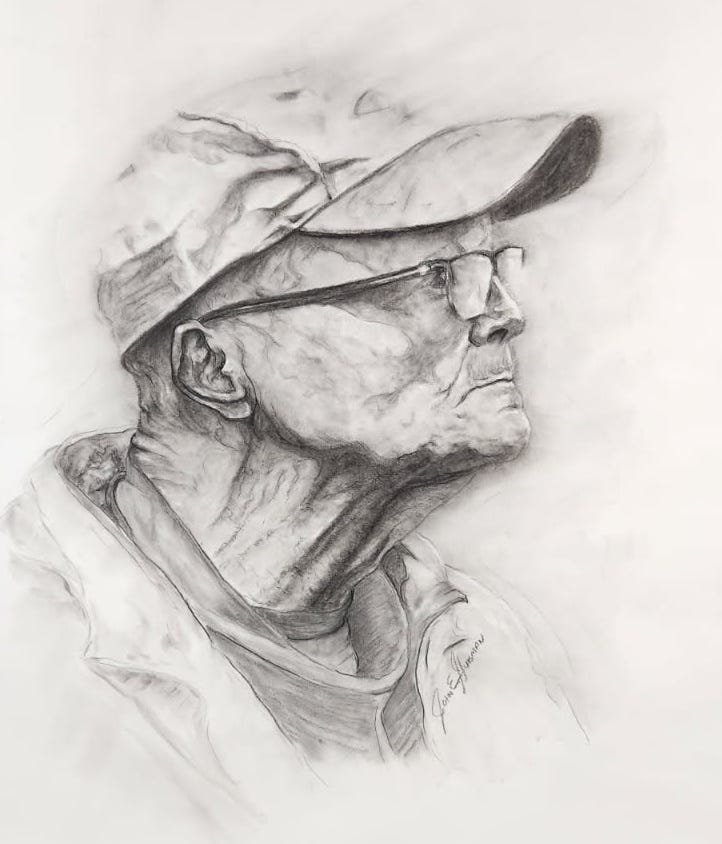
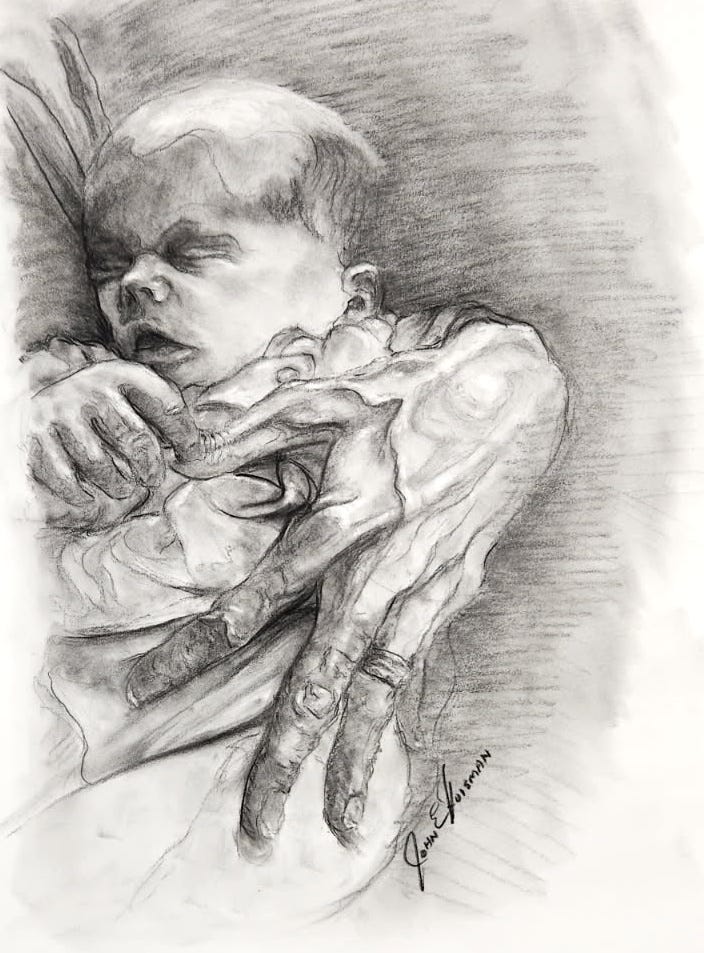
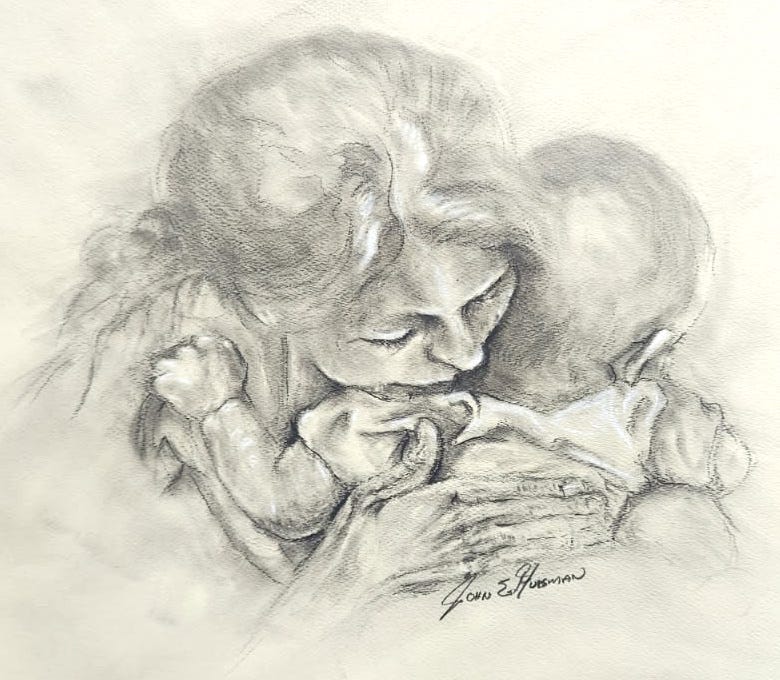
And a while back I finished these smaller charcoal drawings that I am also kind of am happy with:
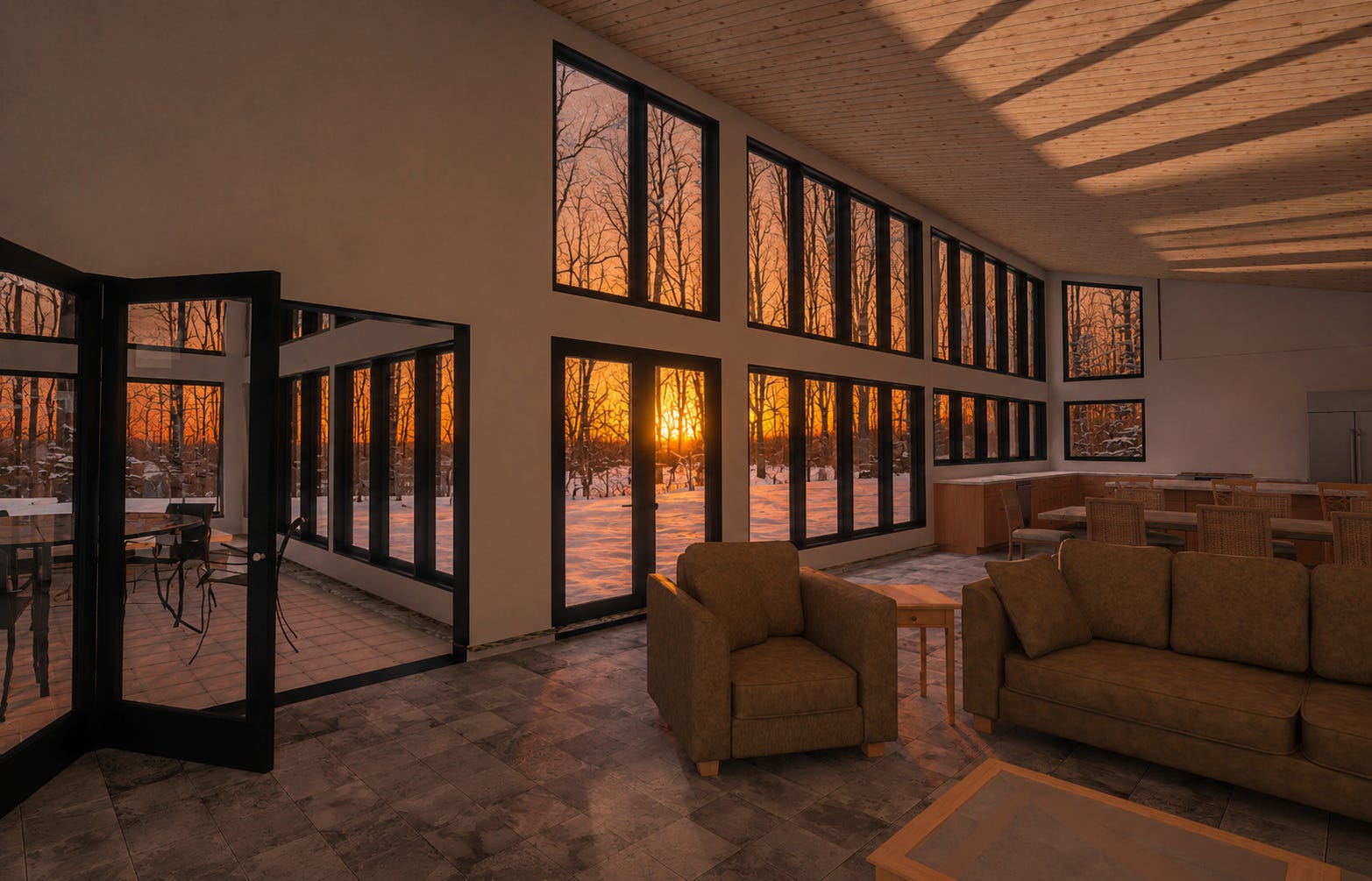
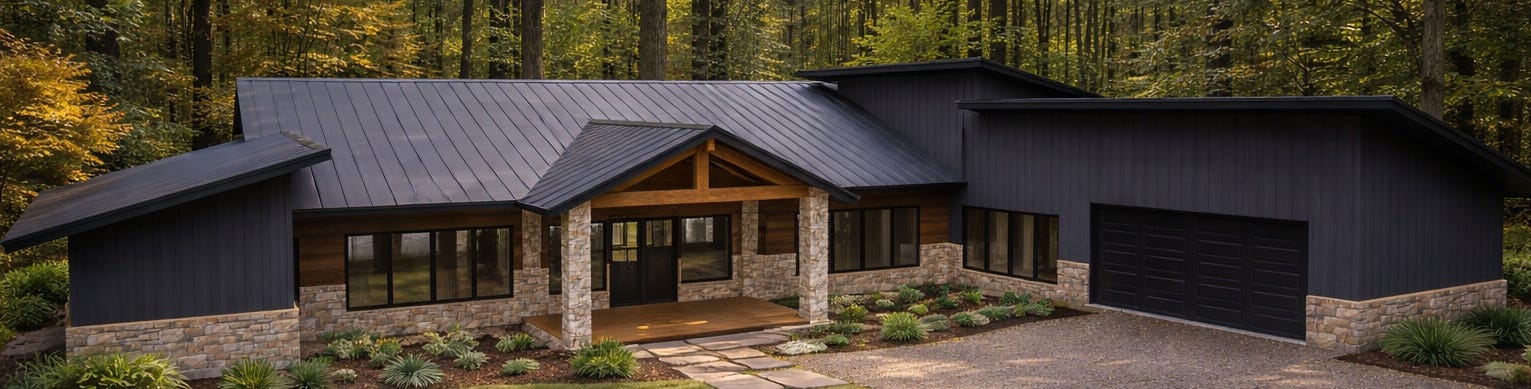
As I continue transitioning, (ever so slowly), out of my role as a general contractor and into whatever comes next creatively, I have been having fun doing more designing of new homes and various projects. One thing I especially enjoy is generating perspective views from different angles and exploring how the spaces feel.
For the past eight years or so, I’ve been using Chief Architect, a remarkably capable residential design program, (especially compared to some of the old CAD programs I used for so many years). These are just a couple examples of the kinds of images I develop during the planning and design process of a project like this. In this first one I was getting a realistic feel for the sun angle and how the sunset would look on the winter solstice.
More about these projects and this transition process in the future.
One of my favorite Rolling Stones tunes in it’s official video format brought to mind because of the sweet saxophone parts done by the great Sonny Rollins who we lost a week or so ago. I know there are countless better examples of Sonny Rollins music but this is where I landed today:
"The impediment to action advances action. What stands in the way becomes the way." — Marcus Aurelius
Perhaps “getting better at drawing” isn't actually about what you produce or how happy or unhappy you are with the resultant product..
It could instead be about how comfortable you feel producing it. How comfortable you can be while doing something that currently makes you somewhat uncomfortable, which may cause you to somewhat lose connection with what you are working with or on, perhaps due to wishing something different were happening – such as type of pose, length of pose, number of poses, subject matter, thoughts of what others might think of your style, technique, results, or whatever.
Many years ago, I read about a study that was done on a number of different people doing different activities – I've forgotten what all they did. Each person studied has essentially "mastered" whatever they were doing, yet they continued to practice on a daily basis. The question was: what, if anything might they be gaining from their continued practice, since they no longer seemed to get any "better" at doing their activity.
One thing that was needed was some quantifiable way of measuring whatever might be occurring. One measure they used was the amount of oxygen a person used to accomplish whatever they were doing. What was revealed was that each person became more efficient at doing their activity, measured in terms of less oxygen needing to be consumed or "burned" to produce their masterful results. In other words, the people developed their capacity to produce the same results with less work or with greater ease.
Even longer ago, I was reading the book Cache Lake Country which included a brief description of a masterful traveler here in canoe country. It described the seemingly effortless ease, grace, smoothness and beauty of how such a man could pick up, flip and shoulder a canoe and carry it across a portage, then flip and lower it into the water at the other end. A beginner, in comparison, would likely struggle awkwardly with lots of huffing, puffing and grunting and perhaps bumping and banging to produce the equivalent result of getting his craft from one lake to another. It's easy to simply observe the differences in the flow of what is happening, no oxygen measurements needed.
Just some thoughts for you to consider. Your personal "measurements" could be what sorts of thought trains you pursue and also how you feel about yourself while drawing or while evaluating what you produce rather than what your actual evaluation might be of what you've produced.